
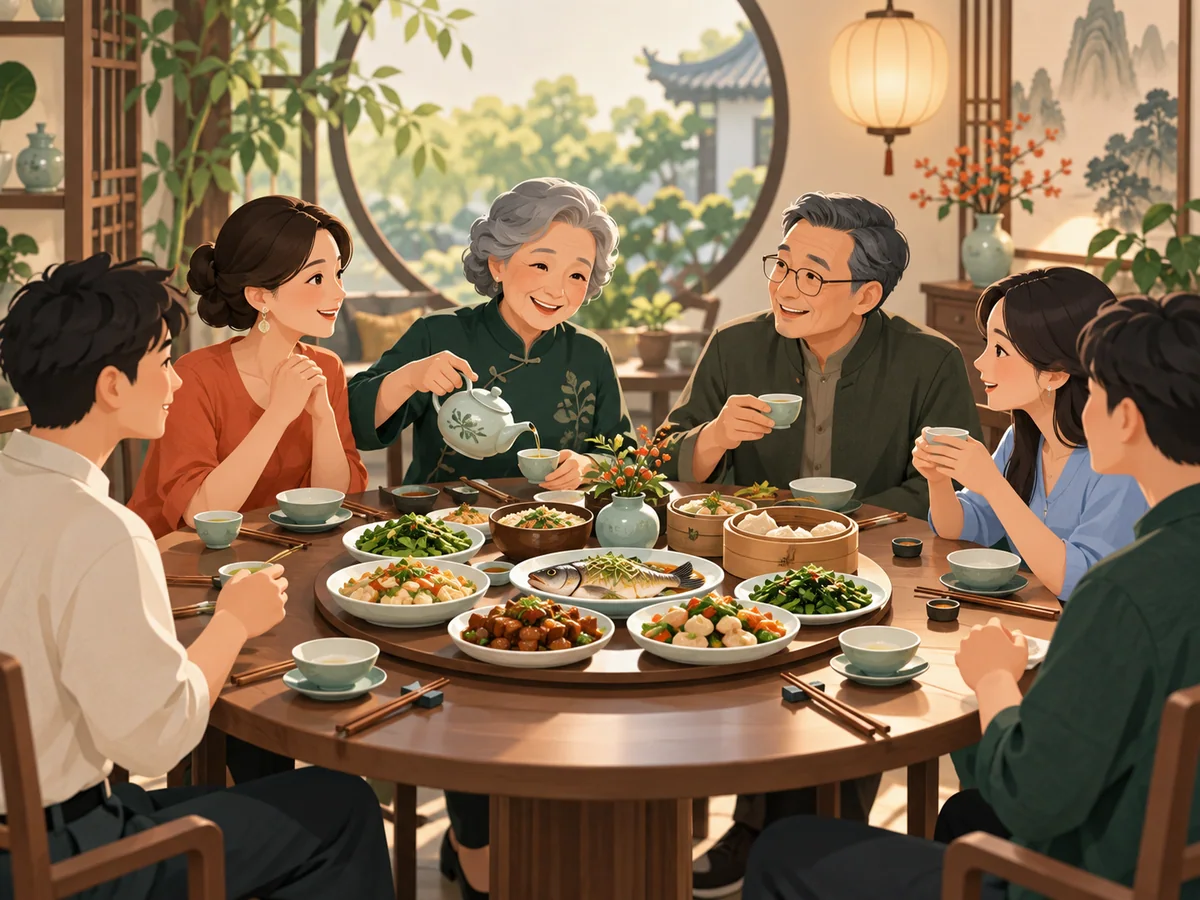
Simple table habits that help visitors feel at ease at everyday meals without overthinking every move.
Meals are often where language and culture meet most naturally. The good news is that everyday table etiquette is less strict than many visitors expect. Watch what the host does, accept help when it is offered, and focus on enjoying the people around you rather than performing every gesture perfectly.
Start with the situation, not the rule
If dishes are shared, take a small amount first and return for more later. It is considerate to let elders or the host begin, especially at a formal meal, but no one expects a guest to know every local variation. If you are unsure, wait a moment and follow the rhythm of the table.
Build a routine you can repeat
A few phrases are enough: 谢谢, xièxie, thank you; 很好吃, hěn hǎochī, this is delicious; and 我吃饱了, wǒ chī bǎo le, I am full. The last line is useful when someone warmly offers more food. Say it with a smile; it acknowledges the care behind the offer rather than simply ending it.
What usually gets in the way
Toasting can be informal or important depending on the group. If you do not drink alcohol, a simple 我不喝酒, wǒ bù hē jiǔ, I do not drink alcohol, is clear. You can still raise tea or water. People are usually more interested in your participation than in what is in your glass.
Try this this week
The most reliable rule is to be attentive. Pass a dish when someone reaches for it, thank the person who arranged the meal, and ask one easy question about the food. Those small actions communicate respect in any language.
A final practical note
Chinese Table Etiquette for Everyday Meals: A Relaxed Starter Guide is not a skill you finish in one sitting. Keep the next step visible: one phrase, one short recording, or one useful sign. When practice stays connected to a real moment, it becomes easier to return to—and much easier to use when you need it.